Albany Vinyl Records store makes a comeback

Albany Vinyl Records store makes a comeback
Pic three
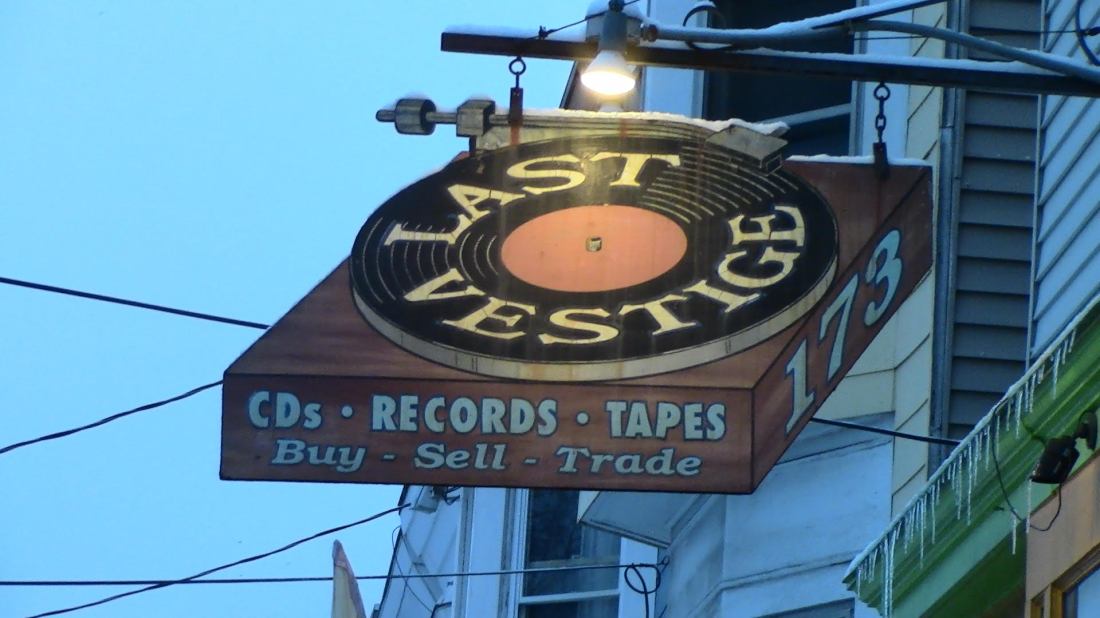
Last Vestige Records sign has hung in front of the shop for years

Vinyl may have been a dying media, but now it’s becoming more popular than ever.

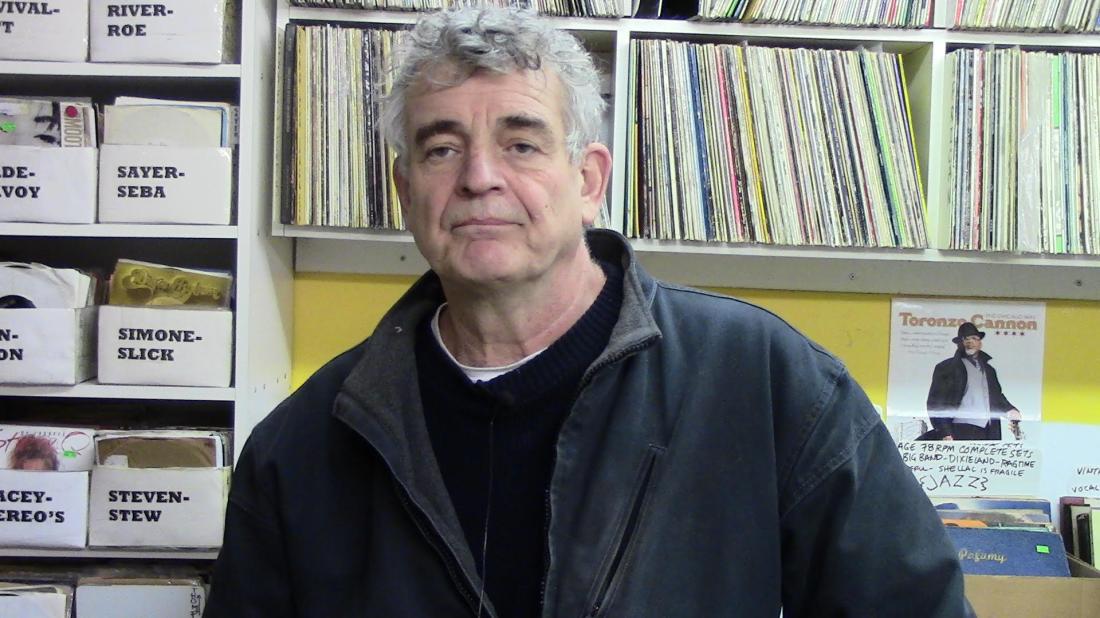
Jim Furlong is the owner and operator of Last Vestige Records in Albany NY.
Last vestige records
Owner of Last Vestige Records, Jim Furlong stands in front of the vinyl records in the back of his shop.

Jims history

He has been in the business for 30 years. He has seen the fall of Vinyl, both the rise and fall of CD’s, the rise of electronic music, and the resurgence of Vinyl.

Furlong has been in the business for a long time. He first started out listening to records in the 60s. In 1977, he took a job at a record store in Albany, called Just a song on Central Avenue.

“They were probably one of the greatest local record stores ever to be, they had loads and loads of new releases,” said Furlong reminiscing about the shop.

He then left his first job to work at another local record shop called Worlds Records, in 1980. Worlds Records was the first used record store according to Furlong.

Furlong then moved to New York City with his band to “make it”, but while he was there he started working at another record shop called Midnight Records.

Midnight Records was a mail-order business, meaning that the shop mainly sold records via the mail. This would allow the shop to sell records anywhere, not just locally.

“He dealt primarily in hard to find out of print records and rare imports, so I got my background in mail-order, by working for him,” Furlong said.

In 1984, Furlong moved back to Albany and started a mail-order business out of his apartment.

After five years, he decided to open up a small shop.

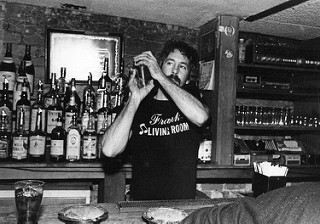
His first shop was located across the street from where his shop currently sits. His first shop was located in the same building as a famous popular Albany bar called Franks Living Room, which had been vacant until Furlong put his shop there.
10110533973_7600bf4c69_n
A bartender makes a drink at Franks Living Room bar where Furlong would open his first shop, Quail Street, Albany. Picture credit to FLickr Albany Group Archive https://www.flickr.com/photos/albanygroup/10110533973

Last Vestige was opened on Halloween in 1989.

After three to four years, Furlong’s business had grown too big for the space. He decided to buy the space he is currently in, in a count auction.

After seven months of remodeling, Last Vestige was ready to be reopened and has been there ever since.

Thanks to his mail-order business, Furlong sends records all over the world to places like Japan and South America.

“In ’89 when I opened, records were becoming a thing of the past. So, there were lots of great Vinyl out there people were unloading, and I would buy it because I had a niche market with my mail-order and there were still plenty of people coming in locally, regionally, and out of the country to the US to buy Vinyl.” Furlong said.

At this time, Furlong was the only record store in town, so anyone in the area who still wanted to buy records went to him.

Vinyl’s resurgence 

According to Furlong, midway through this decade: vinyl began a comeback, “Suddenly, everybody was getting back into vinyl again.”

Even vinyl factories have started reopening to accommodate the higher demand.

Vinyl factory
A vinyl disc being made in a factory. Photo credit to Alastair Philip Wiper of Wired and Mixmag

As a result of this, it has been more difficult and more competitive for Furlong to get collections into his shop like he used to.

According to Furlong, the records everyone wants that he would have stocked up in backorder have now diminished.

“Whereas five years ago I might have had 15 or 20 Led Zeppelin albums or Black Sabbath, or ACDC in backup of each title, now I have none, or I have one or two at any given time, and they disappear as quickly as they come in, because a lot of people are back into it again,” Furlong said.

However, Furlong is not upset about this problem, he thinks it’s great that so many people are back into and buying vinyl again.

According to Furlong, there are many reasons why vinyl has come back into style.

One reason is that many people are fed up with the music industry. He also thinks that people like to gravitate to the punk and do it yourself or DIY crowd.
Pic 2
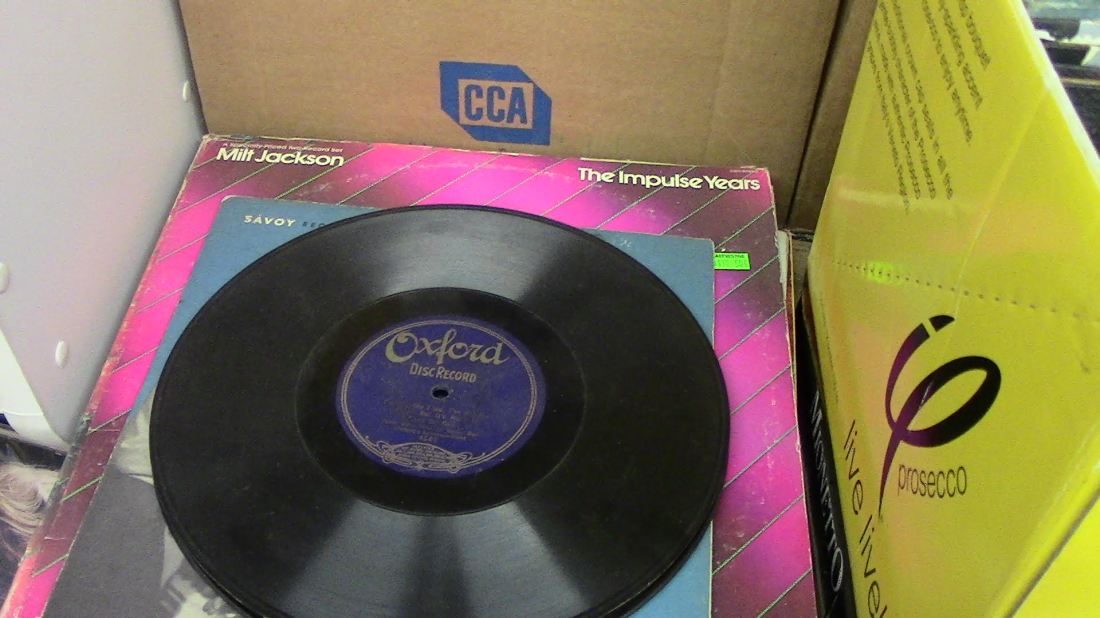
This old vinyl record is one of many lying around his shop

He also believes that shops like his have been doing better because of mainstream vinyl prices being too high.

“You go into Barnes & Nobles and they have a ‘gigundus’ record department now, but the cheapest albums are 20-25 bucks, and it just annoys me.” Furlong said, “If I get the originals in, I’m selling them for what the new ones are costing, if not less.”

Furlong also thinks that the fact that people like the physical album covers along with watching the pin go over the record itself and the whole novelty of it all is a large reason for the resurgence of vinyl.

Furlong has a big mix of customers now, “it’s loads of young kids who discovered their parent’s turntables and are grabbing onto it and buying stuff. There are people who sold me all their albums 15-20 years ago, who are now back rebuying and getting back into it again. There are the older people, my age, older baby boomers, who just like it.”

Whatever the case may be, vinyl is making a comeback and people like Furlong make sure to keep the art of vinyl alive.


Photojournalism for Reporters

UAlbany student repairs shoes to pay for school

IMG_2249
Serena Pryor uses a shoe catalog to register a customer

Serena Pryor, a UAlbany student spends most of her time outside of school working at the Delmar Bootery in Stuyvesant Plaza to pay for her schooling.

The Delmar Bootery is a small family run business so workers like Pryor have to do many jobs within the store.

When ringing customers up for their purchases, Pryor uses a catalog so that the store can purchase the right shoe for the customer from the original shoemaker.

IMG_2251
Pryor puts back an expensive pair of leather shoes that a customer tried on

Before she can ring up a customer, Pryor usually fits them with shoes that they choose, often taking them off display racks.

image_6483441 (1)
Pryor retrieving a shoe that a customer wants that was not seen on the rack outside

If a customer would like to try on a different size or even a different shoe altogether, employees like Pryor head to the back of the shop to see if they can find the pair the customer wants.

image_6483441
Pryor putting away a shoe after a customer tried it on

Since many of the shoes that they sell are expensive leather–often selling for around 500 dollars on average–workers have to be careful in how they put them back in their boxes.

Pryor meticulously wraps the shoe in plastic and puts it in a special cardboard box, lined with tissue paper to ensure the shoes remain safe.

image_6483441 (3).JPG
Pryor dyes a customer’s white shoe black because the customer liked that color better

Not only does Pryor help fit shoes for customers, but she also fixes shoes for them too. Since it is a small store, the store may have a certain type of shoe but not the color that a customer wants. Shown in the picture above, Pryor dyes a shoe to fit the preference of the customer.

They only dye shoes occasionally, due to a lack of color dyes and the fact that the dyes can be unstable, according to Pryor.

image_6483441 (2)
Pryor bags a pair of shoes for the next days work

At the end of the day, Pryor bags shoes that have just been repaired or have just been submitted to be repaired in order to keep pairs of shoes clean and together.


Intersemiotic Expansion for Text-Image Relationships

  1. Screenshot (9)Screenshot (10)This caption is from the Daily Gazette. The caption is redundant because it only reiterates what the picture is. The caption reads ” Dawn Chiormitro left, and Daria Walker, both of Glenville cross State Street in downtown Schenectady.” This only says what we can see in the picture making it redundant. What should’ve been included was also why they were crossing the street making it relevant. It should say “Dawn Chiormitro left, and Daria Walker, both of Glenville cross State Street in downtown Schenectady while they are participating in Small Bussiness Saturday.”
  2. Screenshot (11)Screenshot (12)This caption reads “New York State Sen. Catherine Young, a Republican, emerges from a party conference at the Capitol in Albany on Nov. 16, 2018.” While this is a good caption it can be redundant because it only says exactly what’s in the picture. a more appropriate title would be “New York State Sen. Catherine Young, a Republican, emerges from a party conference at the Capitol in Albany on Nov. 16, 2018, after Democrats won the Senate this month.” I think that this would be more appropriate or closer because it tells what is happening and why. The original caption is lacking in context.
  3. Screenshot (13)Screenshot (14)This is a great caption to use. It only says “David Dybas” the man’s name. There is so much needed here in the caption that isn’t said. A better caption would give more detail about what is happening like “David Dybas winner of the special election gives a speech at the city council after his victory.”
  4. Screenshot (15)Screenshot (16)This one is also a bit redundant because it only talks about what is happening in the caption. I would change it to “Michelle Annese and snowman-loving Paula Tambasco stand in front of an oven where they hold a Christmas Land holiday attraction in AltamontScreenshot (17)Screenshot (18)
  5. This caption is not as precise as it could be and it is redundant. It only labels chief justice John Roberts. If I were to change it I would try to capture what he was doing. Something like: “Supreme Court Justice John Roberts, speaking with fellow justices at an event in Washington, March 15, 2017.”

Contextual Misrepresentation in Photojournalism.

For this assignment, I will use an example by Twobuttonsdeep.com.


The Article in question was an essay on the difference between snow days as teachers versus snow days as students, and it was posted November 17, 2018.

There is one problem: the photo is not credited.

Not only does the author of this article, not credit where this photo is from, but many other places are also guilty.

The original photo is originally credited to the AP and originally posted on a story covering a large blizzard–in 2006. Over a whole decade before the Twobuttonsdeep story.

Screenshot (8).png

At least other places like the Atlantic, Buzzfeed, and the HuffingtonPost had the integrity to source their picture when they used it.

The only thing is that this picture is a decade older than all of the articles that used it. I understand that it is a great picture, but I feel that it should be mentioned that the picture is over a decade old.

Professor Palmer interview

Screenshot (4)For the interview I interviewed Chris Bragg. Chris Bragg is a reporter for the Times Union. His beat is State and local politics for the Times Union. His main beat is local government verything from the New York Senate and Assembly, when they are in session, to local councilmembers, to mayors—everything and anything that has to do with State politics, he covers.

The blog that he writes for is called Capitol Confidential: a blog about the goings on of local and state politics. The blog updates and posts dozens of stories each week. The Times Union blogs have built in ways to help people share and send their work around the internet. The blog itself has Facebook, Reddit, Twitter, and RSS feeds that help people share and send these blog posts. Bragg also said that he has a twitter profile in which he shares all of his stories. His twitter profile has around 8,000 followers. Some of these followers include Maggie Haberman of the New York Times, S.E. Cupp of CNN, the Manhattan institute think tank, and even Senator Corey Booker.

Times Union receives thirty five thousand page views a month. Some of the politics blogs are not as trafficked as much as other blogs such as the food blog and the shopping blog, but a lot of people still view the politics blog.

Bragg says that his beat is especially difficult. He spends 100 percent of his time 365 days a year doing his job. A lot of his time is spent around these people, either at the state house or at meetings or press conferences. He says that overtime the lines between source and friend became blurred. He was actually becoming friends with some of his sources, which is not good for journalistic integrity. He said that when he saw everyone every single day and was friendly with them it became hard to write a negative or critical story about them, which is the whole purpose of journalism—to write the truth.

Bragg spends most of his time on twitter supporting his work rather than himself. Many other people on twitter promote themselves over their work, while Bragg posts only about his blog and his beat. However, being one of the premier beat reporters for the Times Union covering the political circuit he still has amassed quite a lot of followers, such as the important and famous people listed above, showing that his reach is quite far even though he doesn’t have as many followers as other journalists.

This is why he has not been working from the capital, to avoid these kinds of ethical dilemmas and entanglements. He still covers these things, but his base is no longer the capital. He now works out of his office at the Times Union. Which is also another pitfall as being in the capital building is an advantage since that’s where all the action happens, especially in State politics. Bragg says that finding and covering stories isn’t all that bad as he has built up connections and relationships with sources that he can get a lot of the information that he needs in order to do his job properly.

Albany refugee center helps children learn English

Albany refugee center helps children learn English

IMG_0001
Francis Sengabo: Operations Director

By: Nicholas Sherman

Francis Sengabo was born in Rwanda. In 1994, he fled his home country during the genocide. He settled in a refugee camp in the neighboring country of Tanzania, where he worked with the Red Cross to help other refugees that were coming to the camp. He was there for ten years.

Eventually, he was able to come to Albany under refugee status.

When he got here, he was unable to speak English and had trouble adjusting to life in the United States.

Sengabo was like many of the refugees who come to America each year seeking a better life. What made his transition from refugee to citizen harder was that he had children who needed looking after.

Despite speaking multiple languages including French and several African languages, once Sengabo moved to the US, he had to learn English.

He went to the Emmaus Methodist Church in Albany to learn English from one of the Pastors through reading the Bible.

During one of his lessons, Sengabo let his children play outside—alone. The pastor questioned him where his children were, and once he told her, she said that he should not let his children play outside alone. Having to watch his children made learning English much harder.

RISSE project 390 2
Volunteer playing with children

It was then he decided to found RISSE. RISSE stands for Refugee and Immigrant Support Service of Emmaus.

Many of the refugees and immigrants that were first taken in were people escaping the turmoil in the Congo.

In 2007, Sengabo wrote a proposal to the church to create a program where refugees and immigrants can learn English while their children can play and be supervised. The program was approved and started as a program in the church.

The program started off with 15 students—including Francis.

Eventually,  RISSE was able to grow enough to move into their own building and create more programs and take in more people.

RISSE helps children.

Now, RISSE has close to 100 kids who come in every day. These children are from more than 23 countries from Bangladesh to Haiti. They learn English and get help with their schoolwork. They also get to play and socialize with each other along with American children. Many volunteers bring their own children to play and socialize so that children who are new to the country can get to know people in a friendly way.

RISSE project 390 3 (1)
Some of the many projects children have made, showing their the country they came from

There are also people who help children go to the library and other public places around the city.

Volunteers from the local community and the Church help, but also students from Saint Rose University come to help as well.

RISSE project 390 (1)
Children run around trying to get candy during the RISSE Halloween Party

For Halloween, 2018, students from Saint Rose University came to RISSE to volunteer. They helped put on a Halloween party for the children. They also took the children out trick or treating, where they went out back to the playground and threw out candy to the many children who were ravenous for candy.

RISSE also offers two levels of English speaking programs to adult refugees and immigrants. These programs are taught by volunteers.

RISSE project 390 4 (1)
One session of the English Language Learning Program

Asides from English language learning classes, RISSE offers other programs designed to help people who are new to the country adapt to.

Sengabo and other volunteers teach classes in American civics.

“We teach them to be good students and good citizens,” Sengabo said.

This class helps refugees and immigrants learn more about American government and American life. They also offer help to legal refugees and citizens apply for citizenship as well as learning the necessary information to become one.

The center also brings in a myriad of people who are willing to teach to immigrants about American life. The program brings in police officers and firefighters to instruct immigrants what to do if certain situations arise, as many of them don’t know how to navigate American life.

Volunteers also help bring people to grocery stores and help them get groceries. There are also classes and volunteers there to help people prepare food, as many of the people who come to RISSE have never lived in an urban setting like Albany, according to Sengabo.

Many schools also partner with RISSE. Albany medical school brings students to the center to help immigrants with any problems they may have. They help immigrants with medical problems as well as helping them fill out the forms they need to get medical help.

The University at Albany, Sienna, and the College of Saint rose all also help by sending in student volunteers.

The center also supplies hot meals for people in need.

RISSE also helps to bring the immigrants and refugees who come in into the community; they have brought in Representative Paul Tonko as well as other officials to help them get adjusted into the American and Albany community.

RISSE is still growing, and many more people are coming in to get help.

Project Update

Project Draft

I Contacted RISSE last week. I talked to two people, one person being a volunteer and another being one of the members who runs the organization. I am waiting for a response. When I talked to them, they said they would get me into contact with the founding member. I am going to call back today and set up a time with them in which I can go and video tape them and get all of my information. I have also started to write the 800 word article for the project.

RISSE, located in the Albany Suburb, Pine Hills, is a charity organization that helps immigrants and refugees. The family church based group that started from small beginnings, which I think could be an interesting story. Another aspect that’s interesting is the fact that many of the volunteers are immigrants themselves. This aspect alone is interesting enough, immigrants running and volunteering at a refugee center to help others in situations like their own. Lastly, the fact that it is a refugee center is interesting enough. They have afterschool help and education for refugee children to learn English and other educational activities that will help them in the United States. They help the adults as well. They help them in ways that will help refugees build their resumes and get good productive jobs in the United States so that they can escape the impoverished conditions they fled from.